When Trying to Think Your Way Out of Distress Doesn’t Work
This is for those who have tried to think their way out of feeling anxious, afraid, angry or ashamed and it didn’t work. Spoiler alert: there is nothing wrong with you. Let me tell you why.
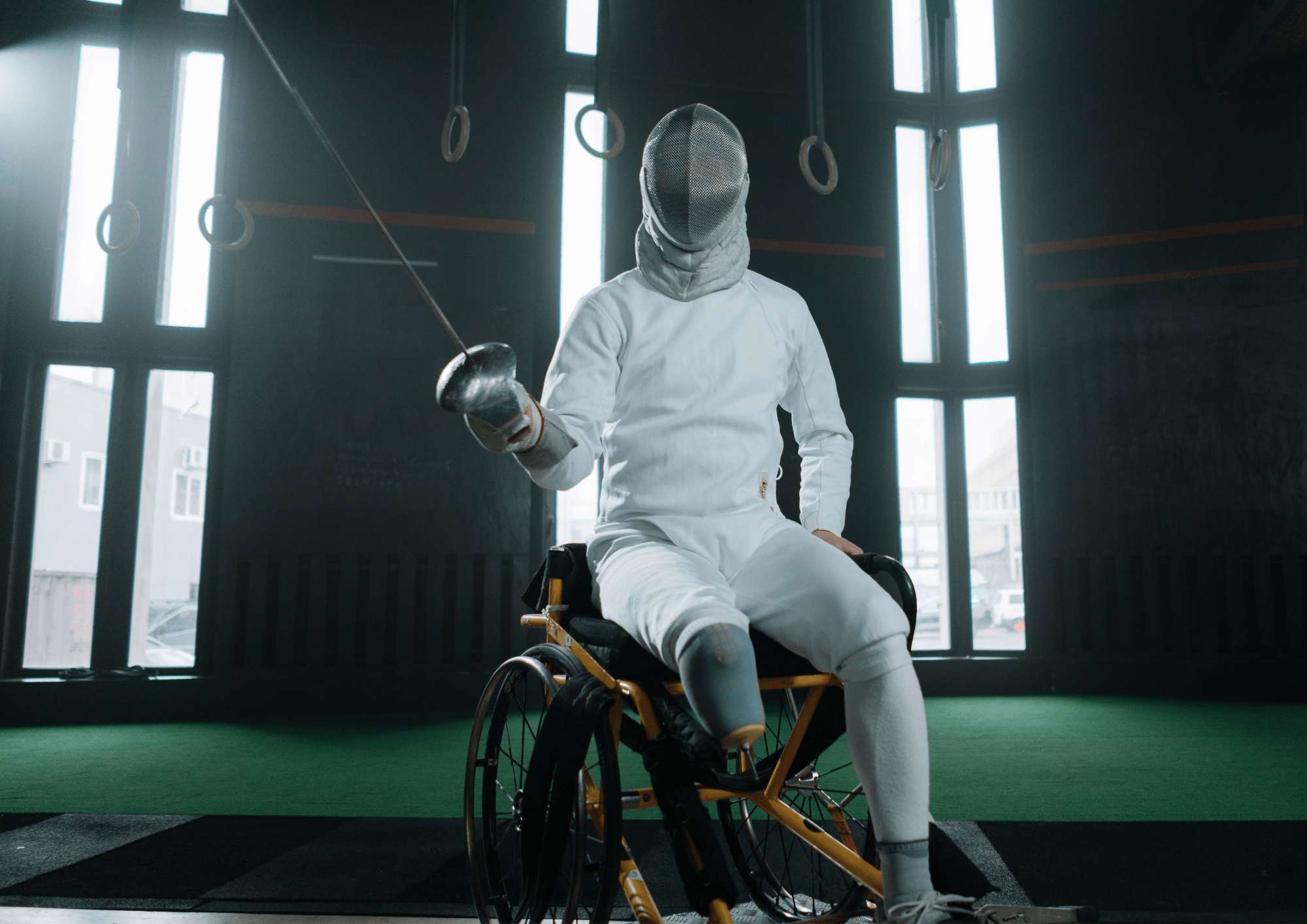
Much of traditional sport psychology has placed considerable emphasis on mental skills training and cognitive (thinking) strategies. And these strategies are great and can be really helpful when the person using them is not in a survival state.
What do we mean by survival states?
Let’s start at the beginning. Our autonomic nervous system (ANS) is responsible for all the processes in the body that we don’t consciously control such as our breathing and heart rate. It is also responsible for scanning our environment for signs of safety and danger, and as a response to what it detects, it gets our body ready to move, freeze, shut down or rest.
When our ANS detects danger, whether physical or psychological, it can move us into a hyperaroused state (fight or flight). In this state, our body is flooded with stress hormones, our breathing and heart rate increase, our blood vessels constrict and our muscles tense. We might feel angry or anxious in this state. All of this happens to help us fight or run away from what our nervous system perceives as a threat.
If our ANS perceives that fighting or running away isn’t possible or would make things worse, we may move into a hypoaroused state. In this state our breathing, heart rate and digestion slow down. Our body may release endorphins to blunt our perception of pain. We might feel dissociated, numb or helpless.
When we are in either hyper- or hypoarousal, our nervous system is prioritising survival and protection. Our capacity for flexible thinking, problem-solving and perspective-taking becomes limited. Our resources are being directed towards responding to what our nervous system perceives as threat.
During a competition or a race, our ANS may detect threat in our environment. It may be due to others’ expectations, demands or the potential consequences of our underperformance, such as losing our spot on the team. If that happens, we can find ourselves in a hyper- or hypoaroused state. In that state, we can try to be positive and reframe our negative self-talk. We can try to debate our irrational or illogical thoughts. We can try to focus on our goals or image ourselves perform well. But when we are in a survival state, thinking our way out of distress may not be the place to start. And more often than not, trying to think our way out of an overwhelming experience can leave us feeling even more distressed.
So what can we do if we are in a hyper- or hypoaroused state during a competition or a race?
Before we try to think our way out of distress, let’s support our nervous system in accessing a sense of safety. When we’ve accessed even a small sense of safety or comfort, thinking strategies are likely to be much more helpful.
Getting to know and working with our nervous system can take time. It involves developing several skills such as interoception (the ability to accurately detect bodily sensations), resourcing (intentionally connecting with a resource that helps you access a sense of safety and comfort in your body) and several other skills that have very technical names that I wouldn’t want to scare you with.
Importantly though, it is not about learning and using each skill in isolation. These skills can certainly be helpful in moments of distress, but meaningful change is more likely to come from gradually building our capacity to stay with difficult experiences without getting overwhelmed. It is also about helping our nervous system shift flexibly between states in response to what is happening here and now in our environment.
If you’re looking for support to create meaningful change, I’d be happy to help. And if you’re not yet ready to start this journey, but would like to access a sense of safety at times of distress, you could try resourcing.
What is resourcing?
A resource is anything that helps you access a sense of safety or comfort. Resources can be relational, environmental, sensory or imagined. They can be anything that helps you access even the tiniest sense of safety and comfort.
Resourcing is the process of intentionally connecting with your chosen resource and noticing how your body responds to it.
This could be through a familiar object that feels comforting, such as a cuddle toy; imagining a place where you feel a little safer and more comfortable, such as a lake in the middle of a forest or your grandma’s kitchen; bringing to mind a person with whom you feel secure; or simply looking around your environment and finding something that is pleasant to look at. You don’t have to find something that is traditionally considered as “calming” or “peaceful”. What matters is what it means and feels like to you.
Getting curious about safety
Once you have found a resource, you might begin to notice what happens in your body as a response to connecting with it. Imagine that you are a curious scientist and explore the bodily sensations associated with safety in as much detail as you can.
Where in your body can you feel it?
How big is it?
What shape does it have?
If it had a colour, what would it be?
Is it moving? Does it have a texture?
Does it feel light and fluffy like the clouds? Or is it more like the cool, rhythmic movement of a wave?
There is no right or wrong here. You don’t need to make anything happen. You don’t have to force yourself to feel safe. Just be curious and notice what happens to the sensation connected to your resource next.
Perhaps you notice warmth in your chest. Perhaps your shoulders soften slightly. Perhaps your jaw unclenches a tiny bit. Perhaps you notice your breathing change. Perhaps you feel nothing at all. Whatever you experience is okay.
The aim is not to perform safety the right way. It is simply about becoming curious about how your body responds to something you find safe, supportive or comforting. If you really want your resource to help you at times of distress, you need to practice connecting with your resource at times when things don’t feel overwhelming. Remember, it is a skill. You wouldn’t start practicing playing the guitar during your first live concert either (at least I’d hope so).
Takeaway
So if you ever find yourself in hyper-or hypoaroused states in training sessions, competitions or at your races, please know that there is nothing wrong with you or your ANS. It is simply doing what it has evolved to do: protect you from what it perceives as a threat. And if you’re not being chased by a sabre-tooth tiger, you could try resourcing to access a greater sense of safety.
Athletes’ Experiences

