Hi, I’m Dalma
a Sport and Exercise Psychologist in Training

My story

Growing up in Hungary, I tried a lot of different sports. I did ballet and danced during kindergarten, then I swam and played tennis in primary school. At the age of 11, I joined a basketball club in Budapest, and I ended up playing there for eight years.
For those eight years, basketball was a huge part of my life. I had four or five training sessions a week, and one or two games on the weekends. Besides school and basketball, I didn’t have much time for other hobbies, but I didn’t mind at all. My team became my second family. We supported each other through the good times and the bad; we laughed and cried together.
But as we got older, the failures, the lost games, the injuries, and the constant physical and mental pressure began to take a greater toll on all of us. I struggled to cope with expectations and my fear of failure. I didn’t want to let anyone down.
Toward the end of my basketball career, it all became overwhelming. The enjoyment I used to feel slowly faded, and eventually, I stopped playing. I couldn’t beat my strongest opponent—myself.
Upon retiring, I wanted to understand my experiences. I had so many questions, such as, “Why did I feel so nervous before games?” and “Why couldn’t I do the things in games that I could confidently do in training?”
After graduating from secondary school, I set out to find answers. I completed my BA in Psychology in Hungary, then moved to England to complete my MSc in Applied Sport Psychology at the University of Winchester.
By the end of my studies, I had found answers to many of the questions I’d had about nerves and hindered performance. Even though I couldn’t go back and tell my younger self how to cope, I knew I could help others with similar experiences.
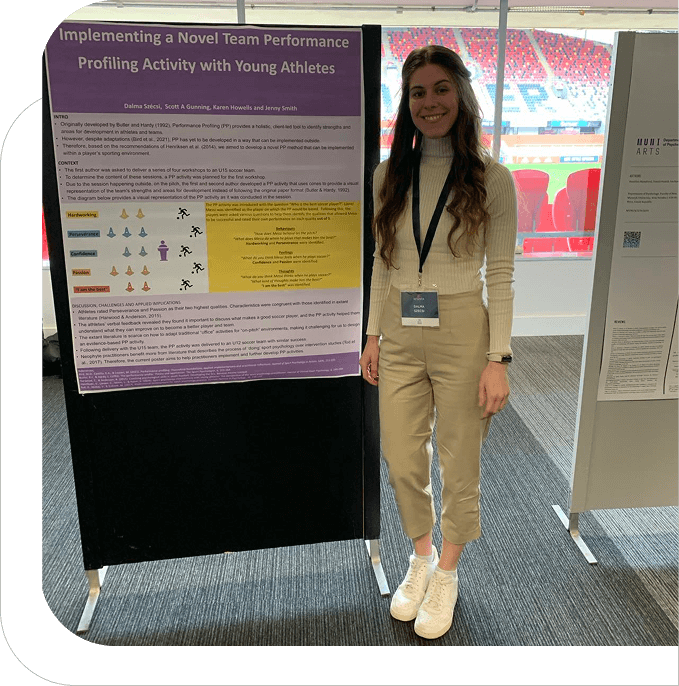
So, I decided to become a sport and exercise psychologist. In 2022, I began my journey with the British Psychological Society to become an HCPC-registered, chartered sport and exercise psychologist.
“Peak performance doesn’t mean you’re thriving inside. And poor performance doesn’t mean you’re not mentally tough.”